What to Wear and Bring on the Ashley Gorge Via Ferrata
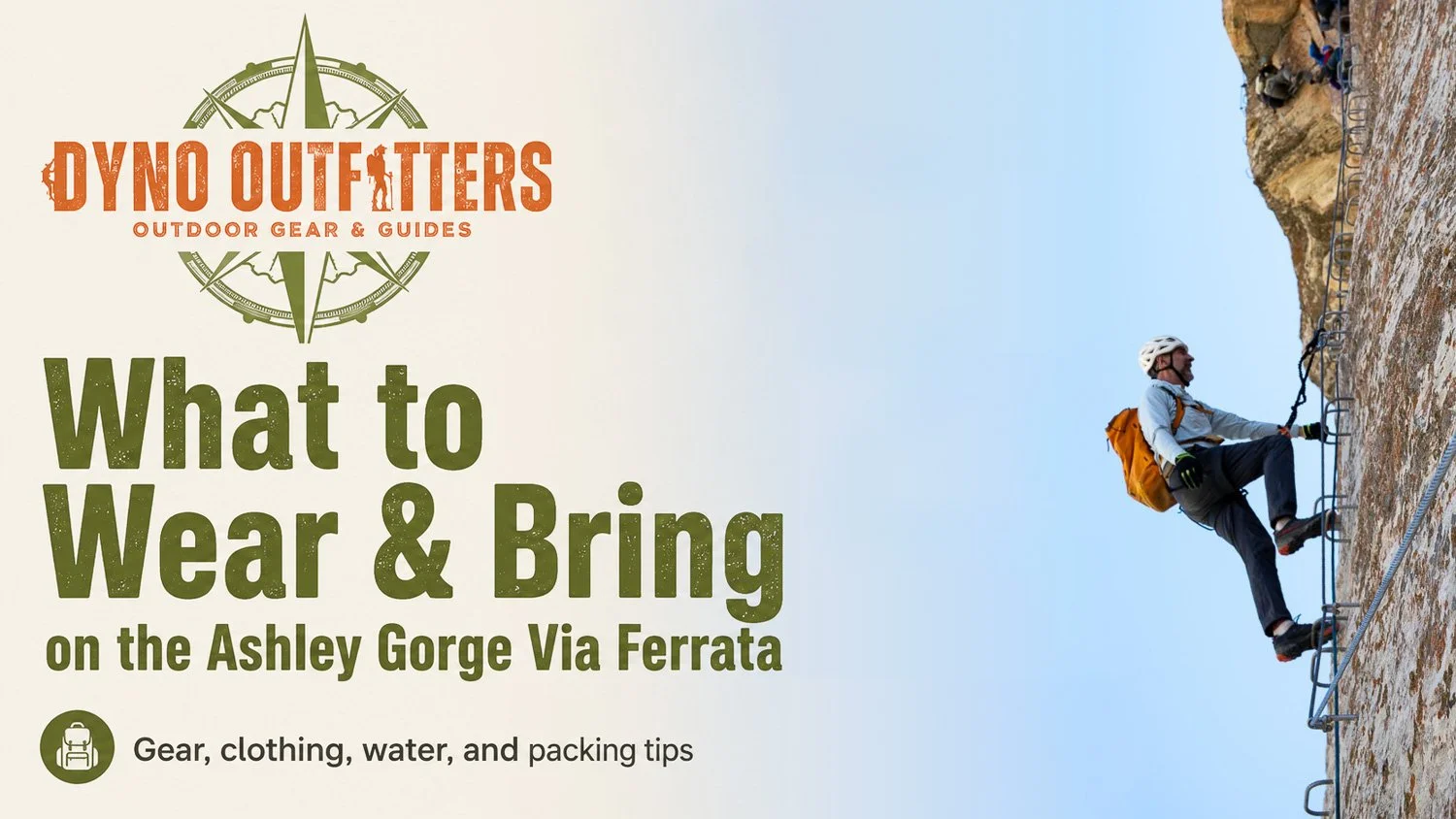
The Ashley Gorge Via Ferrata combines hiking, climbing, fixed cables, ladders, bridges, metal rungs, and exposed canyon terrain. You do not need technical rock-climbing shoes or a large expedition pack, but you do need the correct safety equipment, practical clothing, dependable footwear, enough water, and a few basic supplies.
Use this guide to prepare for a guided trip or self-guided climb near Vernal, Utah.
Quick Packing Checklist
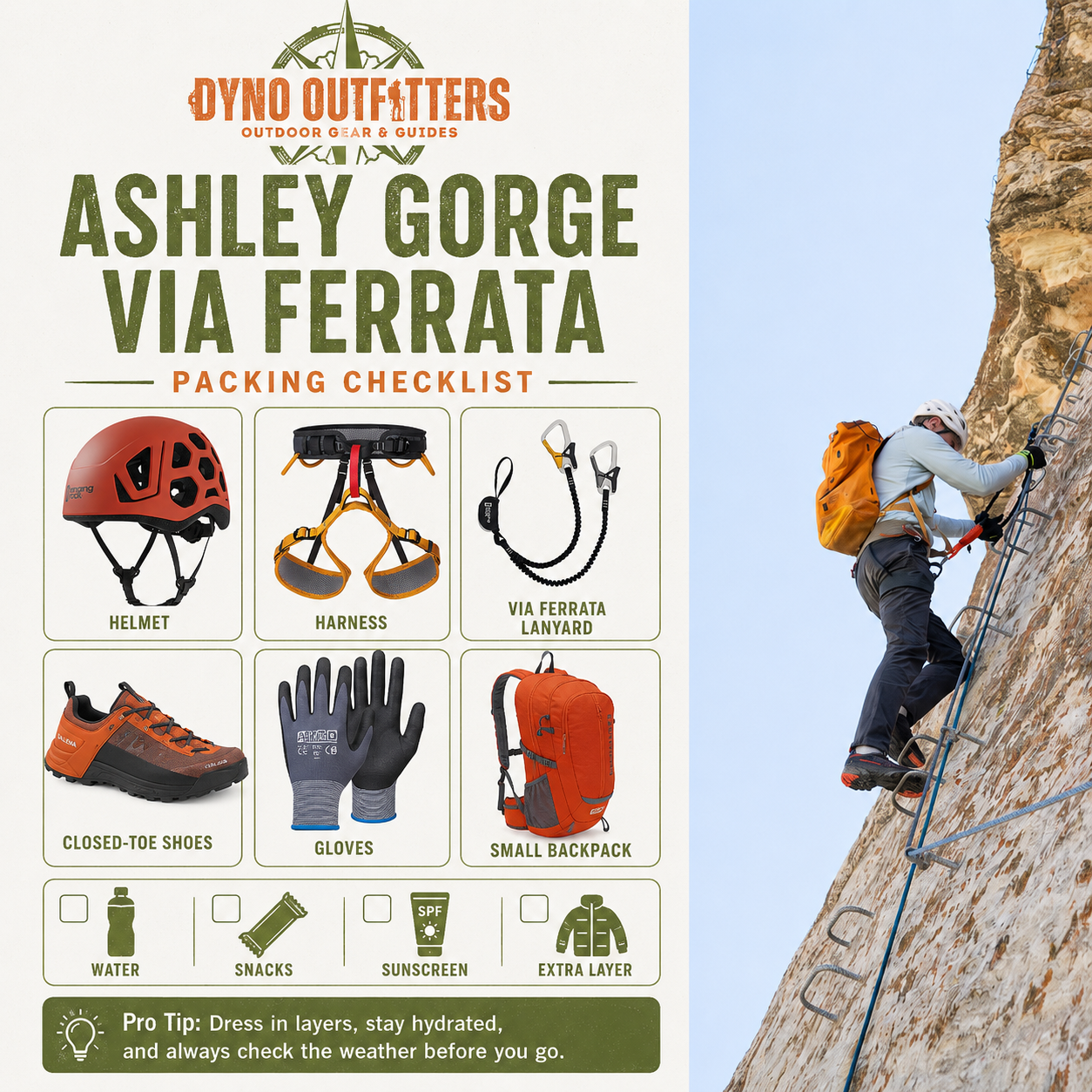
Fully required gear start with an asterisk. If the mandated gear does not match guidelines you can be turned away.
Bring the following items:
*Certified climbing helmet
*Properly fitted climbing harness
*Certified via ferrata lanyard with an energy absorber (you could be turned away if you have improper equipment)
*Closed-toe shoes with good traction
Flexible hiking or athletic clothing
Fitted gloves
At least two liters of water per person
Electrolytes
Substantial snacks or a light meal
Sunscreen
Sunglasses with a secure fit
Lightweight jacket or extra layer
Small backpack or hydration pack
Fully charged phone
WAG bag
Personal medications
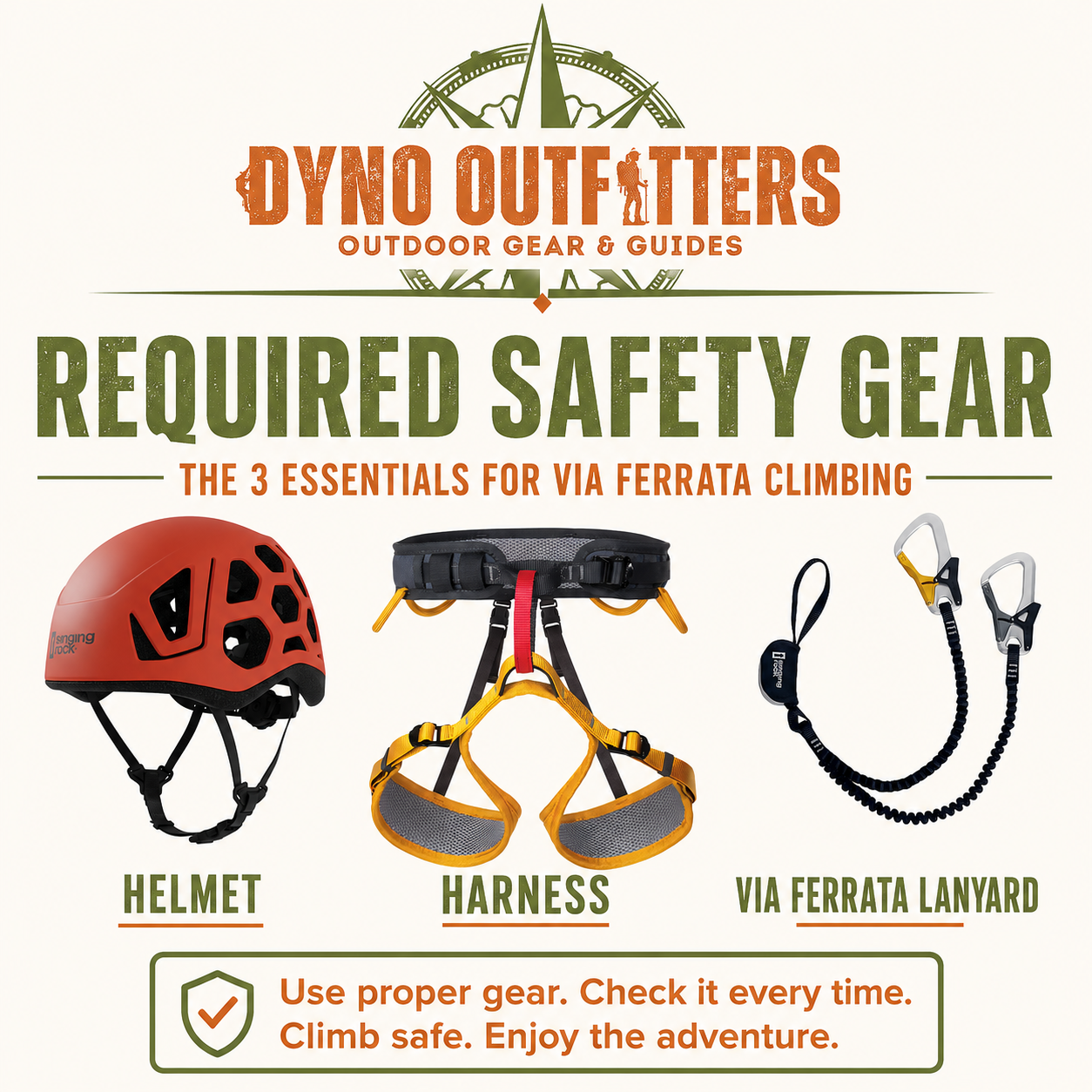
The helmet, harness, and via ferrata lanyard are essential safety equipment. Do not replace them with homemade systems, standard carabiners, slings, industrial fall-protection equipment, or improvised webbing.
Correct helmet, harness and Via ferrata lanyard are mandated
If any of the mandated gear is incorrect, you will be turned away by the county. This is for your safety and is agreed upon when you sign the county’s mandated waiver to do the public via ferrata.
Required Via Ferrata Safety Gear
Climbing Helmet
Wear a certified climbing helmet that fits securely and sits level on your head. The helmet helps protect you from falling debris, dropped equipment, and accidental contact with rock or metal features.
Bicycle helmets, construction hard hats, and recreational sports helmets are not substitutes for a climbing helmet.
Climbing Harness
Your harness should sit securely above your hips and remain snug while still allowing you to walk, bend, and climb comfortably. Avoid bulky belts, overloaded pockets, and clothing that bunches underneath the waist belt or leg loops.
Put your harness on over the clothing you plan to wear for most of the route.
Via Ferrata Lanyard
A proper via ferrata lanyard includes two connector arms and an integrated energy absorber. The two connectors allow you to pass cable anchors while remaining attached to the system. You should bring a rest carabiner to safely rest. If you are renting a via ferrata lanyard they should provide a rest carabiner. Learn more about rest carabiners and their importance on via ferrata’s here: Rest Carabiners
Use only certified equipment designed specifically for via ferrata climbing. Dyno Outfitters rents complete kits that include a helmet, harness, and via ferrata lanyard.
What Shoes to Wear
Wear closed-toe shoes with good tread and a secure fit. You will use them on the approach trail, loose dirt, rock ledges, ladders, metal rungs, and the return hike.
Good options include:
Approach shoes
Lightweight hiking shoes
Trail-running shoes
Hiking boots
Sturdy athletic shoes with good traction
Approach shoes are especially useful because they combine hiking comfort with grippy rubber and a stable sole. Whatever you choose, wear shoes that are already broken in.
Avoid:
Sandals
Crocs
Open-toe shoes
Loose slip-on shoes
Smooth lifestyle sneakers
Heavy boots that limit ankle movement
Rock-climbing shoes are not necessary and would be uncomfortable for the approach and return hike.
What Clothing to Wear
Choose lightweight, flexible clothing that allows a full range of movement. You should be able to raise your knees, take high steps, bend, and reach without your clothing pulling tightly or restricting you.
Best Options
Lightweight hiking pants
Stretchy outdoor pants
Longer hiking shorts
Moisture-wicking athletic shirts
Lightweight long-sleeve sun shirts
Breathable synthetic or wool layers
Lightweight hiking pants provide the best balance of sun protection, durability, and mobility. Shorts can work in hot weather, but they leave more skin exposed to the sun, rock, metal hardware, and harness friction.
Avoid restrictive jeans, oversized cargo pants, loose drawstrings, bulky jackets, and clothing that may snag on cables or equipment.
Dress in Layers
Weather and temperature can change throughout the day. A cool morning can quickly become hot in direct sunlight, while shaded canyon sections or wind can feel noticeably colder.
A simple layering system works best:
Moisture-wicking shirt
Lightweight sun shirt or thin mid-layer
Packable jacket or insulating layer
Weather-resistant shell when conditions require it
Keep extra layers inside your pack. Do not tie jackets around your waist while climbing because loose fabric can interfere with your harness or lanyard.
Wear Gloves
Gloves are not part of the required safety system, but they make the route more comfortable. Your hands will repeatedly contact steel cables, ladders, rungs, and rough rock.
Choose fitted gloves that protect your palms without making it difficult to operate the lanyard carabiners.
Good options include:
Full-finger climbing gloves
Fingerless climbing gloves
Lightweight fitted work gloves
Avoid bulky gloves that reduce grip or finger control.
Bring Enough Water
Bring at least two liters of water per person. Hot weather, longer routes, and individual hydration needs may require more.
A hydration reservoir is convenient because it allows you to drink without removing your pack. Water bottles also work, but they should be secured inside the pack or in tight bottle pockets.
Do not carry a bottle in your hand while climbing. You need both hands available for clipping, balance, and movement.
Electrolyte drink mixes, tablets, or chews are also useful during hot conditions.
There is no location in the canyon with fresh drinkable water to fill up at.
Pack Real Food
Bring enough food for several hours of hiking and climbing. A single small snack may not be enough, especially if you are completing a longer route.
Good options include:
Trail mix
Energy bars
Jerky
Sandwiches or wraps
Nut-butter packets
Dried fruit
Crackers
Salty snacks
Electrolyte chews
Choose food that is easy to carry, easy to eat, and unlikely to melt or create a mess. Pack out all wrappers, food waste, and trash.
Protect Yourself From the Sun
Ashley Gorge is located in a high-desert environment, and much of the route is exposed to direct sunlight. Apply sunscreen before leaving the trailhead and bring enough to reapply.
Pay attention to commonly missed areas such as:
Ears
Neck
Forearms
Hands
Lower legs
Backs of the knees
A lightweight long-sleeve sun shirt can provide additional protection without adding much heat. Sunglasses are also helpful, but they should fit securely or use a retention strap.
Most brimmed hats will not fit safely under a climbing helmet. Use a thin headband, skull cap, or helmet-compatible liner when needed.
Use a Small, Secure Backpack
Bring a compact backpack or hydration pack that stays close to your body. It should be large enough for your water, food, sunscreen, extra layer, phone, personal medication, and WAG bag.
Avoid carrying:
Large overnight packs
Tote bags
Loose shoulder bags
Unsecured cameras
Clothing tied to exterior straps
Bottles or equipment that can fall out
Keep the outside of your pack clean and simple so it does not catch on cables, ladders, or rock.
Bring a WAG Bag
There are no bathroom facilities along the climbing route. Use available facilities before starting and carry a WAG bag in case you need it while in the gorge.
Pack out all waste, toilet paper, wipes, food wrappers, and personal items. Do not cross onto private property or rely on accessing facilities elsewhere in the canyon.
Bring a Charged Phone
Carry a fully charged phone for photos, route information, time management, and emergency communication when service is available. Download important information before leaving Vernal because cellular service may be inconsistent in the gorge.
Keep your phone in a secure, zippered pocket or protective case. Stop in a safe location before taking photos or recording video.
Check the Weather
Check the forecast before driving to the trailhead and again before starting the route. Do not climb during rain, snow, lightning, or other unsafe conditions.
Wet rock and metal can become slippery, and fixed steel cables are especially dangerous during thunderstorms. Starting early can help you avoid the hottest part of the day and reduce exposure to afternoon storms, but an early start does not replace checking current conditions.
What Not to Bring
Leave the following items behind:
Homemade lanyard systems
Open-toe footwear
Glass bottles
Large or loose bags
Dangling jewelry
Unsecured cameras
Bulky clothing
Alcohol or impairing substances
Pets
Equipment you do not know how to use
Carry what you need, keep your equipment secure, and avoid adding unnecessary weight.
Guided or Self-Guided?
A self-guided climb is best for people who already know how to fit a harness, use a via ferrata lanyard, pass cable anchors, manage group spacing, evaluate weather, and make safe route decisions.
A guided trip is the better choice for:
First-time via ferrata participants
Families
Nervous climbers
Visitors unfamiliar with the equipment
Groups with mixed experience levels
Anyone who wants help choosing the right route
Dyno Outfitters provides guided trips with essential climbing equipment, instruction, route support, and local knowledge. Certified gear rentals are also available for qualified self-guided climbers.
Final Preparation Checklist
Before leaving for Ashley Gorge:
Check the weather and route conditions
Complete the required waiver
Confirm your guided trip or rental reservation
Fill your water containers
Pack food and electrolytes
Charge your phone
Apply sunscreen
Bring a WAG bag
Confirm that everyone has proper footwear
Review the route map and safety information
Get Ready for Ashley Gorge
Dyno Outfitters provides certified via ferrata gear rentals in Vernal, including helmets, harnesses, and purpose-built via ferrata lanyards. Reserve your equipment before your climbing day so the correct gear is ready when you arrive.
First time on a via ferrata or unsure how the equipment works? Book a guided Ashley Gorge Via Ferrata trip and let a local guide help with equipment, instruction, route selection, pacing, and safety.
We handle the details. You make the memories.
