What is the Ashley Gorge Via Ferrata?
A starter guide to the sport, the route, and how to make the most of your day in the canyon.
Northeastern Utah doesn't make most people's adventure shortlists. That's exactly what makes Ashley Gorge worth talking about. Carved into a breathtaking sandstone canyon just outside Vernal, it's home to one of the most extreme via ferrata routes in the American West.
What is via ferrata?
The sport, explained simply
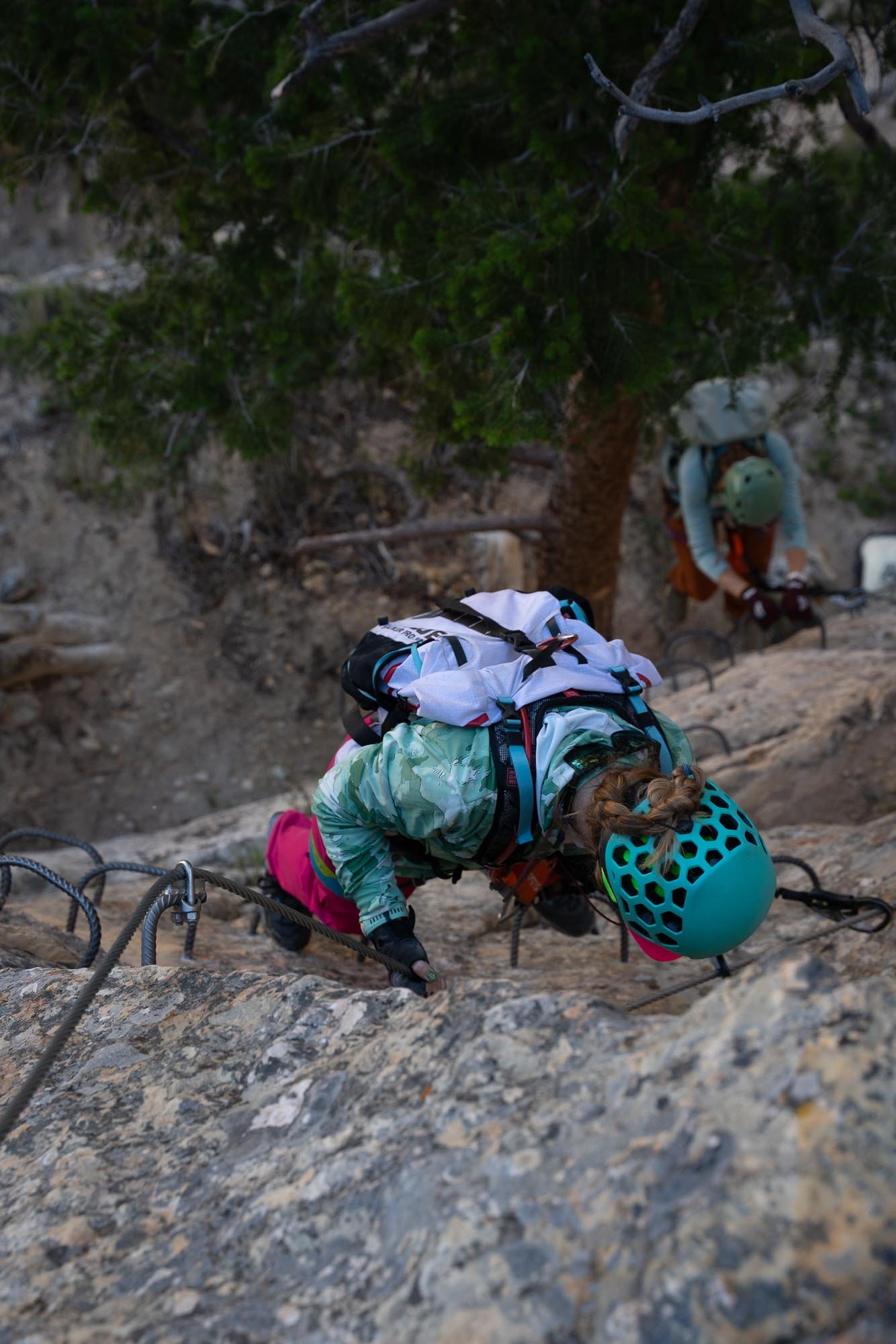
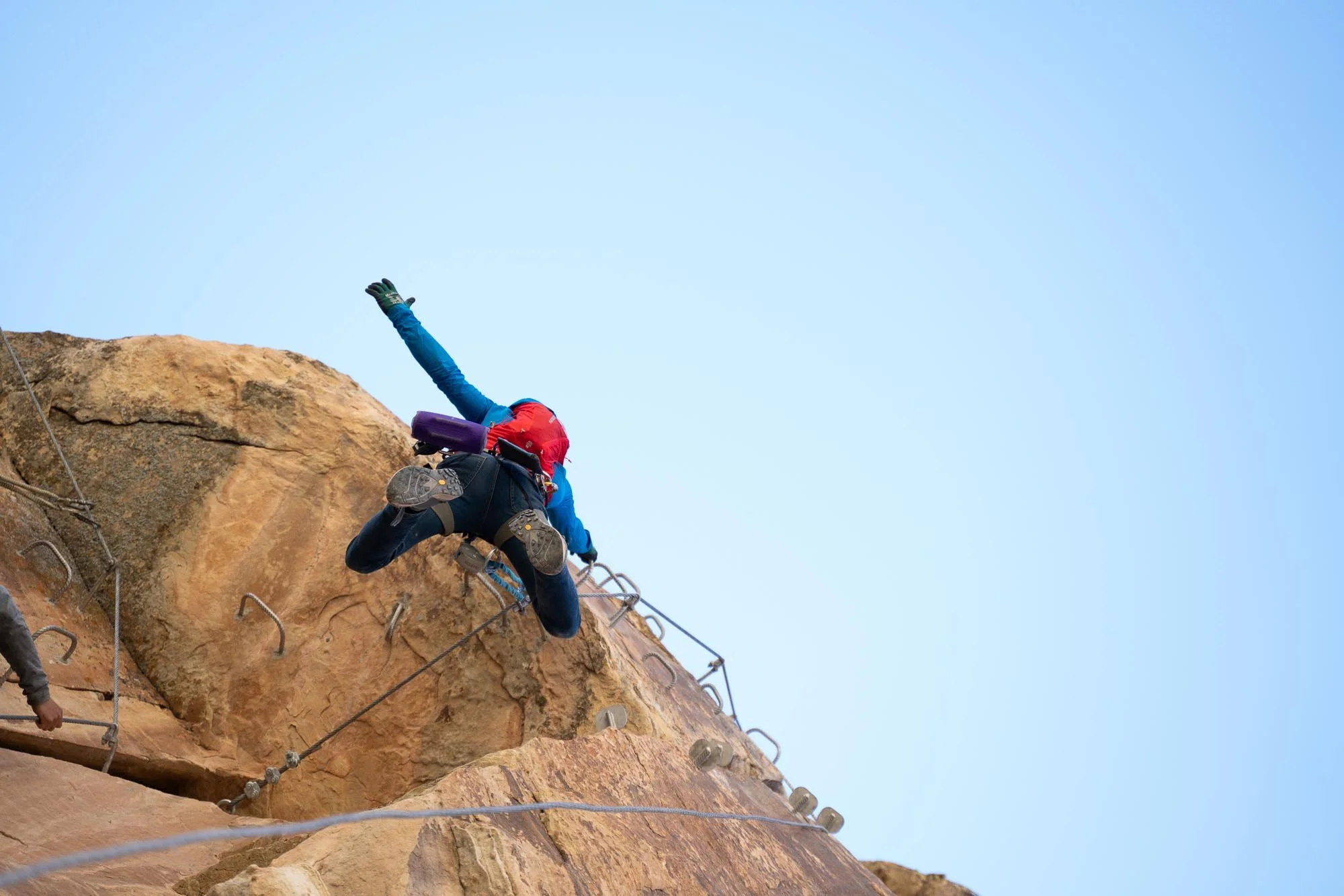
Via ferrata is Italian for "iron road." It's a style of mountain route that uses a permanent system of steel cables, iron rungs, and bridges fixed directly into the rock face. You clip your harness into the cable using a lanyard system as you move, which keeps you connected to the wall at all times. No free climbing. No unprotected exposure. Just you, the canyon, and a route designed to make technical terrain accessible to people who aren't climbers.
The sport originated in the Italian Dolomites during World War I, where military engineers drilled iron routes into the Alps to move troops across otherwise impassable terrain. Today via ferrata routes exist on nearly every continent, but the American West has only recently started developing them in earnest. Ashley Gorge is one of the standout examples in Utah.

Where is Ashley Gorge?
Vernal, Utah · Uinta Basin
Ashley Gorge sits at the edge of the Uinta Basin in northeastern Utah, a 20-minute drive from downtown Vernal. The canyon is carved through sandstone country that most visitors to Utah never reach. While the southern red rock National Parks pull the crowds, this corner of the state stays quieter, and that's part of the magic.
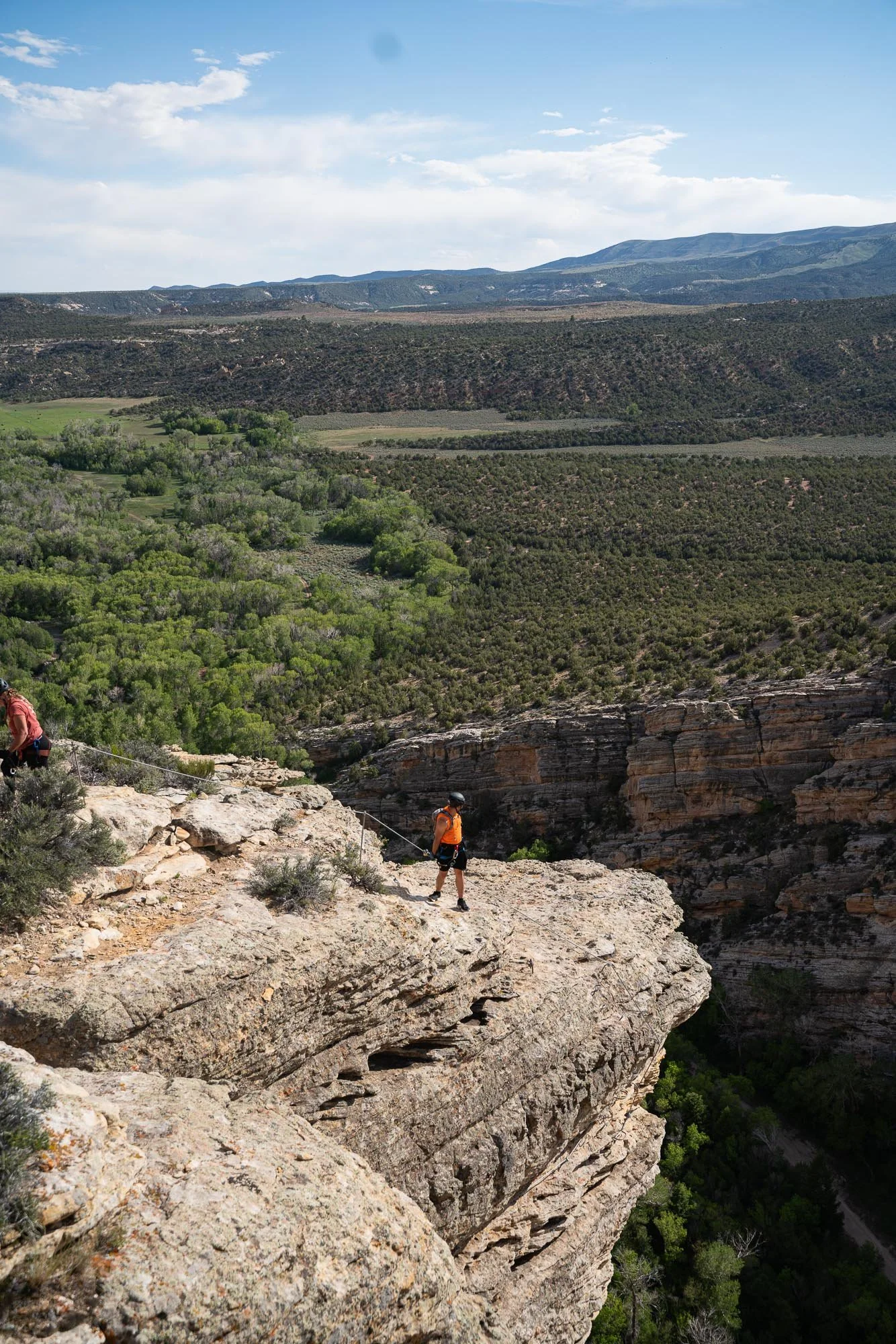
The gorge itself is dramatic. Walls rise sharply from the canyon floor, the rock is layered and textured, and the exposure on certain sections of the route gives you a perspective on the landscape that you simply can't get from a trailhead. It's a place that rewards people who show up willing to move through it rather than just look at it.
What makes the via ferrata in Ashley Gorge Unique?
Prominent features · route character
The AGVF takes you through a series of named features that each have their own character. Shally's Ladder is an early vertical section that sets the tone. The Dynomite Sky Bridge crosses a gap in the canyon that stops people mid-step the first time they see it. T-Rex Terrace opens into an exposed ledge with wide canyon views. The Pump is where the route demands the most from your arms. Thagomizer is spicy, with exposed aretes and a chimney finish, and Jurasskicked? Well, you might just get Jurasskicked.
This is the longest via ferrata in North America. Each feature builds on the last, and on guided trips, we pace the group through each transition, so there's time to take it in rather than rush through it.





Who can do it?
Physical requirements · experience level
The Ashley Gorge Via Ferrata is open to the public, no permit required. That said, Dyno Outfitters does offer guided trips to those without experience. Never worn a harness? You can still do via ferrata. No climbing experience? You can still do via ferrata. No technical training? You can still do via ferrata. What's expected is a reasonable level of physical fitness, similar to what you'd need for a strenuous day hike, and a willingness to be on exposed terrain at height.
However, to do the course on your own, you must be between 90-265lbs. Those outside the weight range for the via ferrata lanyards must be belayed by a professional guide.
If you have a fear of heights, that's worth knowing going in. Via ferrata doesn't eliminate exposure, it just gives you a secure connection while you're in it. Many people who consider themselves afraid of heights find that the cable system gives them enough confidence to push through. Others decide it's not for them, and that's a legitimate call to make before you book rather than partway up the route. For beginners, a guided tour is normally recommended. Read here to find out if you should get a guide.
Ashley Gorge is public land. Here's what that means.
Open access · what it still requires
Ashley Gorge is owned by Uintah County and sits on public land, which means the canyon itself is open to anyone. You don't need to book a guided tour to access the area.
But public access and safe access are two different things. The via ferrata route uses infrastructure, fixed cables, anchors, and hardware that requires maintenance, inspection, and proper use. Knowing how to use a via ferrata lanyard system correctly, how to clip through anchor points without ever being fully unclipped, and how to read the route is not intuitive the first time out. Getting it wrong on exposed terrain has real consequences.
The canyon is open. The route takes knowledge to use safely. Those two things can both be true at once.
There's also the question of gear. A proper via ferrata kit includes a harness, helmet, and a Y-shaped via ferrata lanyard with energy-absorbing shock packs. Certified correct equipment is required. If you go without the correct equipment you can be turned away. Slings, webbing, industrial lanyards, or homemade lanyards from standard climbing gear are not adequate substitutes. If you're heading out independently, understanding what kit you actually need and how to use it is the baseline. Rent certified equipment here <
What about safety on the route?
Fixed cable system · what to watch for
Via ferratas are designed to be one of the safest ways to move through technical canyon terrain—the fixed cable system keeps you connected to the wall the entire time. You clip in, move to the next anchor, clip in again. There's no moment where you're double-unclipped. That said, the AGVF is the longest via ferrata in North America and the canyon demands respect. Fatigue is is a common issue that evolves into heat stroke in the summer months. Go at your own pace, wear closed-toe shoes with grip, dress in layers, and bring enough water and snacks for the full duration of the climb. If you have any physical limitations or if you’ve never done this kind of adventure before, we highly recommend hiring a guide.
New 2026 routes now open
What's next at Ashley Gorge
Uintah County added two new major route sectors this fall, and are considering future expansion. Subscribers to the Dyno email list get exclusive access to updates and promotional trip dates. If you're planning a trip and want to be on that list, the signup is at the bottom of every page on the site.
